NCE.RG | Notes - Ch.5: "Making Social Space for a Dissident Subculture" (3/11)
MARCH 18TH, 2026

⬅️ Ch. 4 Notes | Syllabus | Ch. 6 Notes ➡️
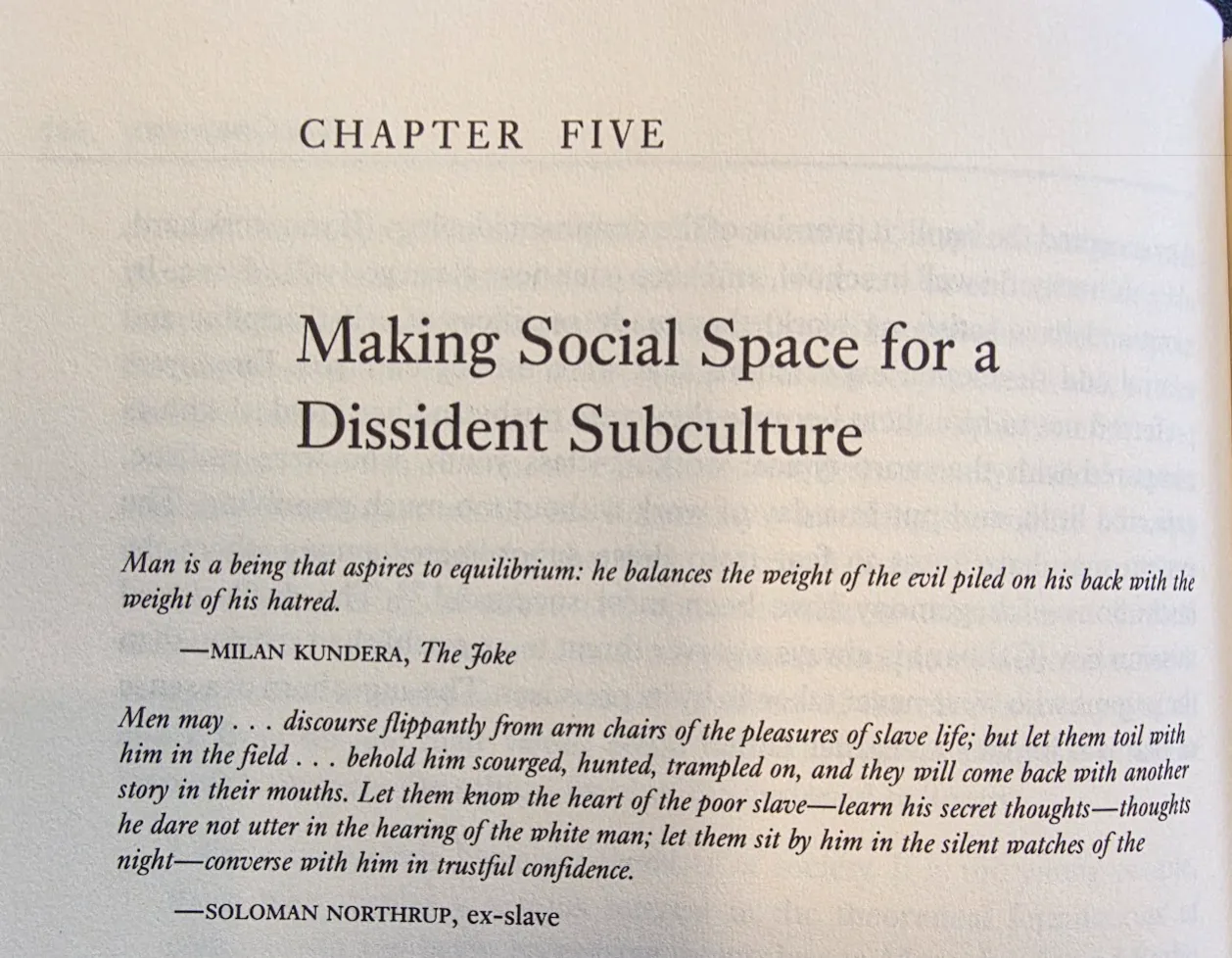
In chapter 5 Scott discusses how the dominant and existing power structures alleviates pressure in the overall system by giving dissidents (and potential dissidents) space to congregate to air their grievances which ultimately effect token or no actual change. People often just want to complain and feel that they are seen or heard. And if they feel they are being seen and heard, will actually put up with a lot. @randylubin made a great point that any system is like a "pressure cooker". It needs to vent appropriately or it becomes a ticking time bomb just waiting to eventually explode. Basically, we have the carnival for a day or week, everyone gets a good laugh, and then everything reverts immediately thereafter.
Relating Scott's ideas (again, he wrote Domination in 1990), in present-day, in 2026, here's what I thought of reading the chapter:
-
Cathartic release that goes no where. Examples:
-
Standup comedians (jesters of the present era) who get up on stage, speak "truth to power" (or at least what many people believe to be an unspoken truth), everyone gets a good laugh and camaraderie that, "Thank God, someone is saying the quiet part aloud", tension and stress in the overall system dissipates, show ends, everyone goes home and basically forgets about said injustice/grievance. eg. Bill Burr on the WNBA.
-
Protests are similar. Protests operate a lot like "brunch" for many people. People get together on a nice day, march out in the streets, wave signs around, get maybe some news coverage, and then all go home at the end of the day. ("Occupy Wall Street" comes to mind, but there are many.) Importantly, from the elite and dominant perspective, nothing material actually changes in the end which is all they care about. Subordinates get to LARP as revolutionaries for a day and then afterwards dissipate. Dominant power structure is preserved. System is restored to stable equilibrium.
-
Social media is similar. Social media is largely performative. Influencer makes a viral short decrying X or Y. Tweets it. Millions of people like/retweet it. Everyone feels good that have "democratically participated" and then go back to mindlessly scrolling whatever. Example: Changing avatar PFPs to express solidarity with a movement and doing nothing else.
-
-
Dissidence that actually goes somewhere.
-
@allison raised a great piece by Corey Doctorow about Millionaire on billionaire violence. The only time dissidence actually goes anywhere is when you can marshal the necessary resources to change the law and mechanics of the actual state. Millionaires have been waging this battle and actually getting somewhere. Example: Daniel Ek of Spotify and DHH hate that Apple has an insane 30% take rate in their app store. Thus, they've gone to war with Apple in the courts and in the legal system to change that. Recently, a ton of new antitrust laws have been slowly actually happening. (One of the most notable ones is Apple actually adopting USB-C thanks to regulation that started in Europe.)
-
Ultimately, to "win" (or at least gain ground) against the dominant, the rules of the system (eg. laws and norms) need to actually forcefully be changed. A system is a series of capture points (see chapter 4 about "ideological state apparatuses": church, media, education, state). Whoever secures the most capture points secures the most heart and mindshare and gets to shape the culture. This is largely what the dominant (according to Scott) spend their days mostly doing.
-
Other notes from our reading session:
-
@randylubin brought up the idea of kayfabe — a wrestling term!! — to best describe what is going on IRL today. There are basically set pieces that are happening right now to push a specific storyline top-down to distract from more organic stories which are bubbling from bottom-up. (Iran War vs Epstein Files being a good example.)
-
@plainscape_cw brought up the idea of discernibility and uncanniness. He specifically cited the art of Alec Sloth and Todd Hido. He was talking about how as an architect, it is this area that is on the very fringes that he finds most compelling.
-
@edgar talked about how they won the national championship in a collegiate sport!! Specifically, we were talking about "communities of fate" and what draws people together. The idea was that when groups suffer together (military people in close-knit units away from home for months/years on end or oilriggers/seamen in dangerous professions), that is one reason strong communities form.
-
Personally, @robert had the theory that we don't have strong communities anymore because "everyone is too comfortable and decadent! If we suffered more privation, we would have more community! Maybe!"
-
@randylubin was unconvinced!
-


